

Rosacea
Rosacea, previously known as acne rosacea, is a chronic inflammatory skin condition affecting the centrofacial region, including the cheeks, chin, nose and central forehead.
This updated UKMLA guide to rosacea is based on NICE CKS, which covers causes, symptoms, diagnosis, and management.
Epidemiology
Most commonly develops in 30-50 y/o
More common in females, but males tend to have more severe presentations
Causes and Risk Factors
The exact cause remains unclear, likely to be multifactorial, involving genetic and environmental factors.
Demodex folliculorum mites are thought to contribute to inflammation in some patients, particularly in papulopustular rosacea
Clinical Features and Diagnosis
Factors known to trigger or worsen rosacea:
- Alcohol
- Emotional stress and exercise
- UV exposure
- Smoking
- Spicy food
- Hot drinks
- Heat or cold ambient temperature
Rosacea is a clinical diagnosis, based on the following clinical features:
NICE CKS: Rosacea can be diagnosed if at least 1 diagnostic OR 2 major clinical features are present.
| Diagnostic features | 1. Phymatous changes
2. Persistent central facial redness |
| Major features | 1. Transient redness / flushing (central facial area)
2. Inflammatory papules and pustules (central facial area) 3. Telangiectasia (central facial area) 4. Ocular rosacea
Note that ocular rosacea may be present with or without skin disease. |
| Minor features | Mainly subjective features:
|
Factors that distinguish acne vulgaris from rosacea:
- Acne vulgaris = comedones present + possible scarring
- Rosacea = no comedones + no scarring + flushing / erythema / telangiectasia
Click to See Clinical Images
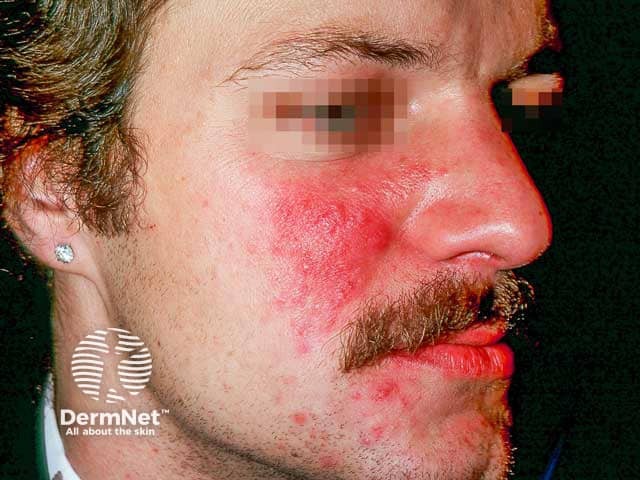
Erythematous telangiectatic and papulopustular rosacea
Source: https://dermnetnz.org/topics/rosacea
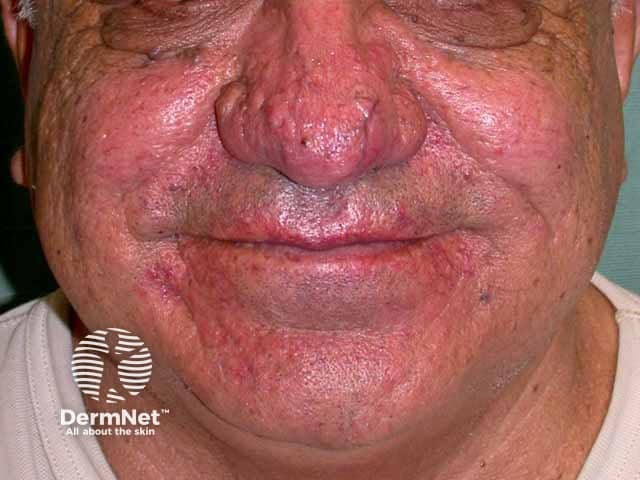
Rhinophyma and papular rosacea
Source: https://dermnetnz.org/topics/rosacea
Management
Conservative / General Management
Avoid triggering factors:
- UV exposure → use high-factor sunscreen
- Smoking
- Alcohol
- Spicy food
- Hot drinks
- Emotional stress
- Intense exercise
Advice on general skin care measures:
- Regular use of non-oily emollients if the skin is dry
- Use gentle soap-free OTC cleansers
- Cosmetics (yellow / green tinted) to camouflage skin erythema
For those with ocular rosacea:
- Use of anti-UV sunglasses
- Minimise exposure to aggravating factors (e.g. air conditioning, excessive central heating, smoky atmospheres, periocular cosmetics)
- Lid hygiene measures
- Use of artificial tears or ocular lubricants
Pharmacological Management (Primary Care)
The management approach depends on the presenting features and severity:
| Presenting feature | Recommended management |
|---|---|
| Transient facial flushing | Consider oral propranolol regularly (2-3 times daily) |
| Persistent facial erythema | Consider topical brimoidine 0.5% gel
|
| Papules and pustules | Depends on severity:
Topical ivermectin is an antiparasitic; it should not be used in pregnant or breastfeeding women. Alternative: topical metronidazole or azelaic acid Alternative to oral doxycycline: azithromycin, clarithromycin, erythromycin (in pregnancy) |
| Inflamed phymatous disease (e.g. rhinophyma) | Consider oral doxycycline for 6 weeks |
Referral and Specialist Management
Consider referral in the following scenarios:
- Not responding to optimal primary care management → refer to dermatology
- Prominent non-inflamed phymatous disease (e.g. rhinophyma) → refer to plastic surgery
- Severe ocular rosacea, or the presence of anterior uveitis or keratitis → refer to ophthalmology
Specialist treatment options include:
- Oral isotretinoin – for severe inflammatory papules and/or pustules, or persistent clinically inflamed phymatous disease
- Electrodessication or laser therapy – for persistent erythema and/or extensive telangiectasia
- Laser therapy or non-laser physical modalities (e.g. electrosurgery, microdermabrasion, excision, loop cautery, scissor sculpting) – for clinically non-inflamed severe phymatous disease